


How Kelly Miller and John Gotz expanded Strawberries & Cream into Loon Lake Iced Tea—and built a business where culture matters as much as the menu.
By 7 a.m. during the Minnesota State Fair, volunteers at a nearby church are already washing strawberries.
The berries arrived from California by truck, often only hours earlier. At the church, volunteers clean hundreds of pounds before sending them back to the fairgrounds. There, Kelly Miller and John Gotz’s team combines them with freshly whipped coconut-based cream and serves them to customers at the Strawberries and Cream booth.
The process repeats every day for nearly two weeks. Last year, the business used about 800 pounds of strawberries per day, with peak days climbing beyond 1,000 pounds.
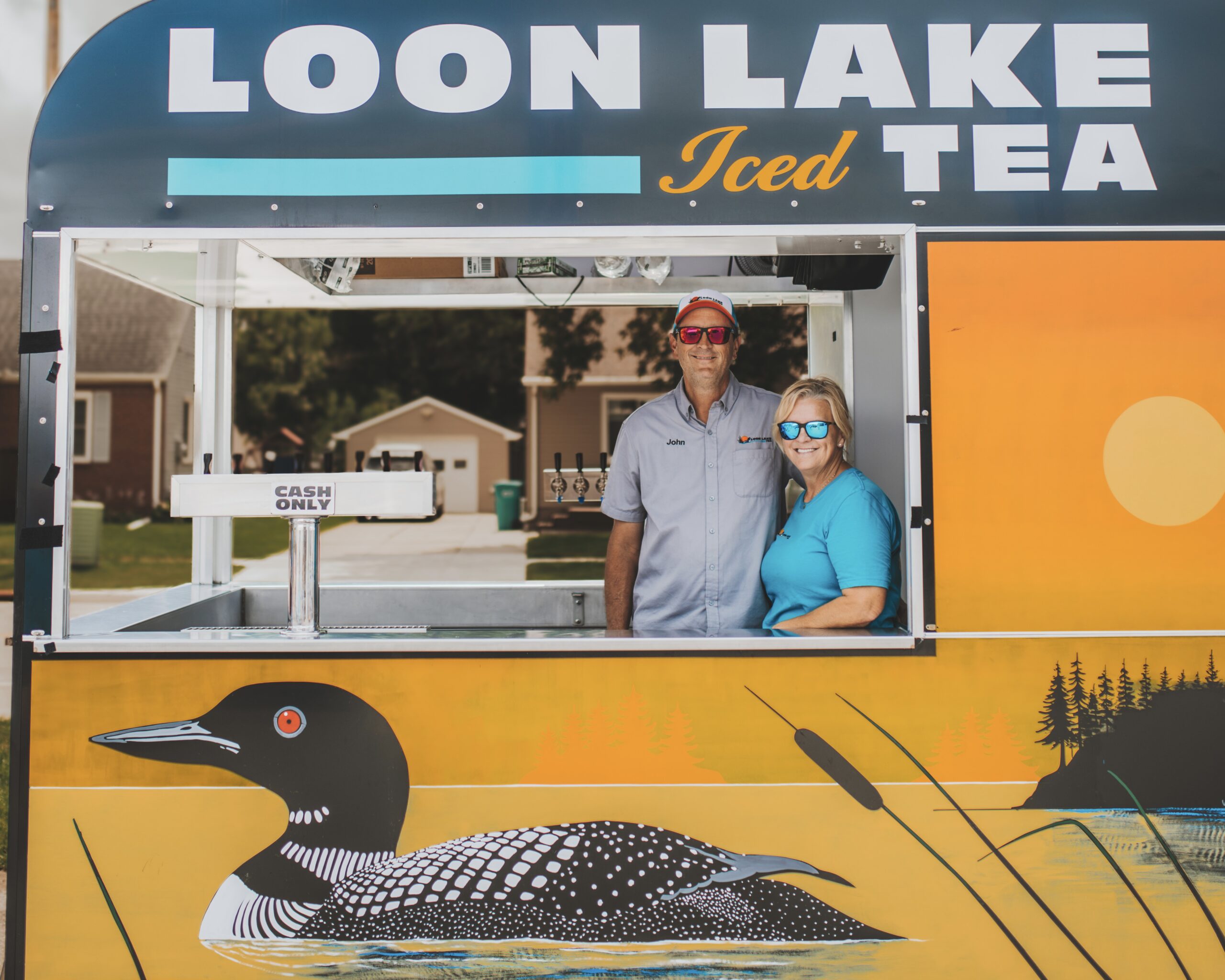
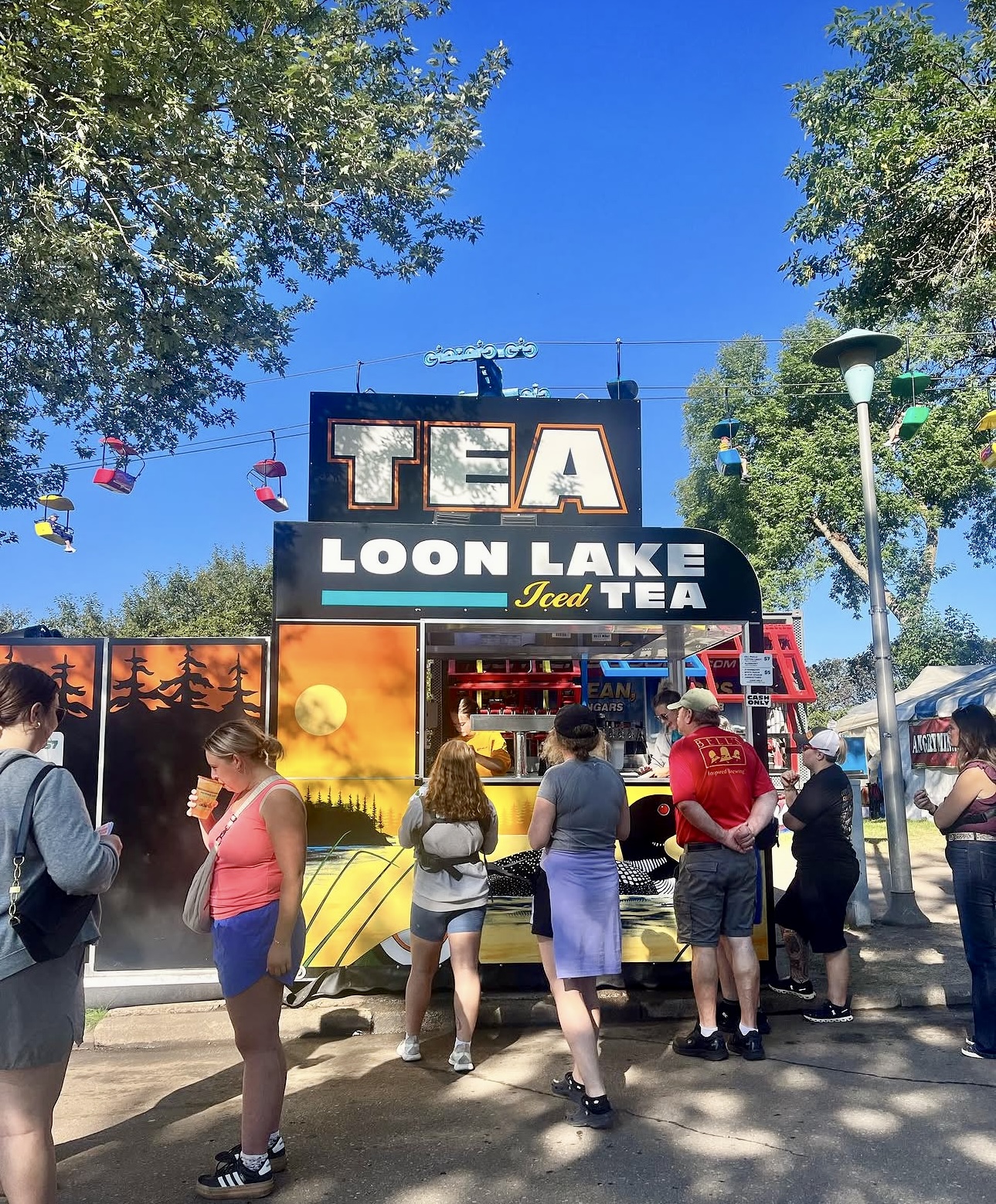
At a second booth nearby, Loon Lake Iced Tea pours thousands of cups in flavors ranging from strawberry and white peach to cotton candy, dill pickle and caramel apple. The business plans for roughly 20,000 cups during the fair.
Most fairgoers never think about what it takes to make that moment feel effortless. Kelly Miller and John Gotz do. Behind every cup is a business built on logistics, innovation and a culture where people matter as much as the product.
“Everyone’s happy at the fair,” Kelly says. “And if they’re not happy, you can usually make them happy.”
Sometimes that takes little more than a smile. Other times, it is a strawberry offered to a crying child with a little cream on top. Either way, Kelly sees an opportunity to connect.
Finding a Different Kind of Work
Long before strawberries and iced tea became central to her life, Kelly built a successful career in human resources.
She worked in compensation, operations and HR systems, eventually helping implement a global platform across 66 countries in two years. She led teams across borders, managed complex projects and learned how culture, systems and relationships influence performance.
She also had an entrepreneurial streak. Early in her career, Kelly purchased rental properties, earned a real estate license and briefly balanced real estate work with a demanding corporate role.
John followed a different path. After working in printing and equipment operations, he built a successful residential contracting business. His work ranged from repetitive door and window installations to precise remodeling projects inside multimillion-dollar homes.
Both eventually reached a similar conclusion. They were ready for something different.
Kelly had moved into consulting, which gave her more control over her schedule but less influence over the decisions organizations ultimately made. John’s work had become physically demanding after years around tools, heavy materials and repetitive motion.
They also wanted to return to Southern Minnesota, closer to family and the pace of life Kelly remembered growing up.
Then Kelly’s mother heard something through a friend at church. Gale, the longtime owner of the Strawberries and Cream business, was considering retirement.
“I was like, ‘What? No way. I have to have that,’” Kelly recalls.
John did not require much convincing. They both knew the booth from the Waseca County Fair and Minnesota State Fair. It had long been one of Kelly’s required stops.
The product was simple: fresh strawberries topped with a distinctive non-dairy cream.
From the outside, the business appeared just as simple.
They would soon learn otherwise.
A Tradition That Began With a Flower Cart
Gale launched the business in Waseca in 1986.
Her first setup was a flower cart equipped with a cooler and canopy. She stood outside to serve customers, while a tiny red trailer behind her housed the operation’s three-compartment sink, mixer and supplies.
Kelly and John later called it the strawberry hut.
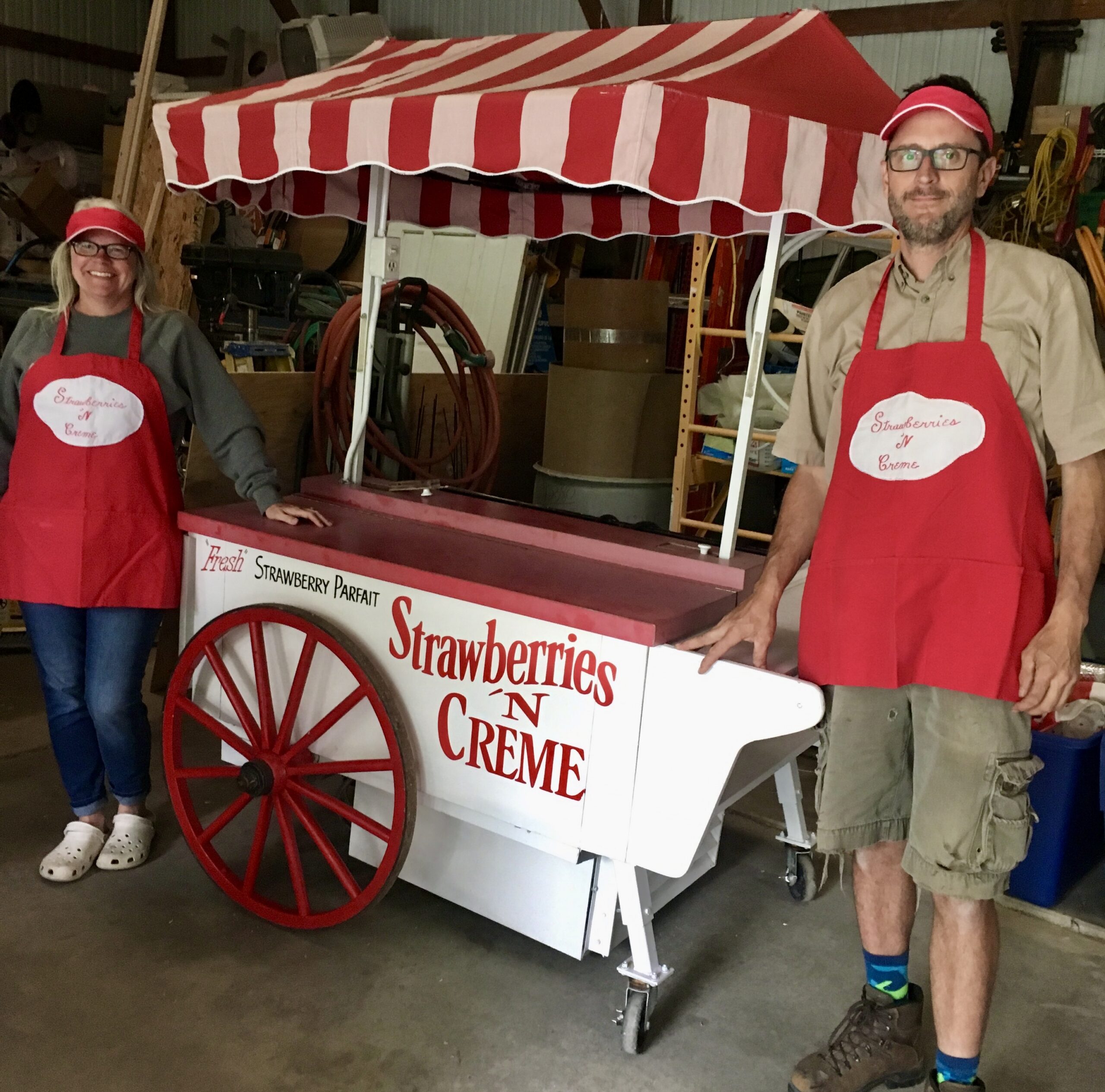
“It was tiny,” Kelly says. “I had to go sideways to get through the screen door.”
Gale initially took the business to county fairs. In the late 1980s, she began pursuing a place at the Minnesota State Fair.
Getting anyone’s attention proved difficult, so she made several parfaits, drove from Waseca to the fairgrounds and left them with her application.
Fair officials tried them and called the next day.
Strawberries and Cream debuted at the Minnesota State Fair in 1991.
“She was ahead of her time,” Kelly says. “She was a trailblazer.”
When Kelly and John met with Gale in 2018, however, they learned that buying the equipment did not guarantee them Gale’s place at the State Fair. Vendor contracts could not simply be transferred to a new owner. They would have to apply on their own.
Their résumés included HR, real estate, printing and construction, but no experience operating a State Fair food stand.
Their excitement cooled, but they did not walk away. Instead, they bought Gale’s county fair equipment and decided to learn.
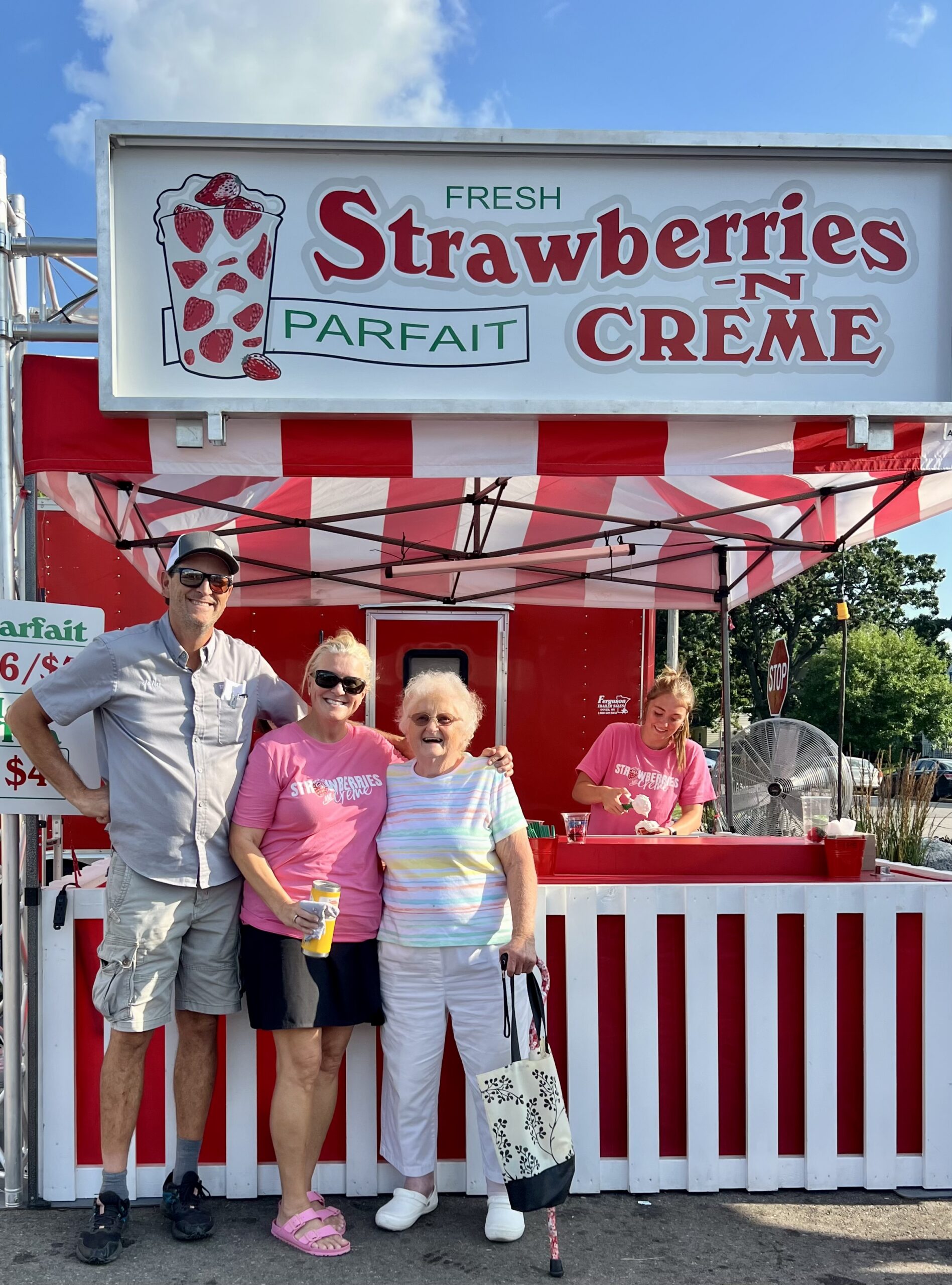
Their first event was the Waseca County Fair in July 2018, only two months after purchasing the business. Gale was ill that week, but her grandson helped them navigate the first few days.
By the end, Kelly was exhausted.
She was also hooked.
“I looked at John and said, ‘This is unlike anything I’ve ever done in my life,’” she says. “I was physically exhausted, but I was also exhilarated.”
After years spent in corporate environments where most calls involved problems, Kelly found herself surrounded by people who wanted to be there.
The fair was outdoors. It was active. It was filled with families, traditions and conversations.
The work felt immediate and human.
Earning Their Place
Kelly approached the Minnesota State Fair application like a business proposal.
She created a short presentation explaining the history of the booth, Gale’s success and the changes she and John believed could make it stronger. Her plan emphasized customer engagement, operational systems and the experience her team would create.
Then she printed the presentation, dressed professionally and drove to St. Paul to deliver it in person.
“I said, ‘She did pretty well, and I think I can do better. Here is how,’” Kelly recalls.
Months passed.
Then, in the spring of 2019, Kelly saw a call coming from the State Fair.
“I just said, ‘No way. No way,’” she recalls. “The woman started laughing and said it was the best response she had gotten in a long time.”
Kelly and John were in.
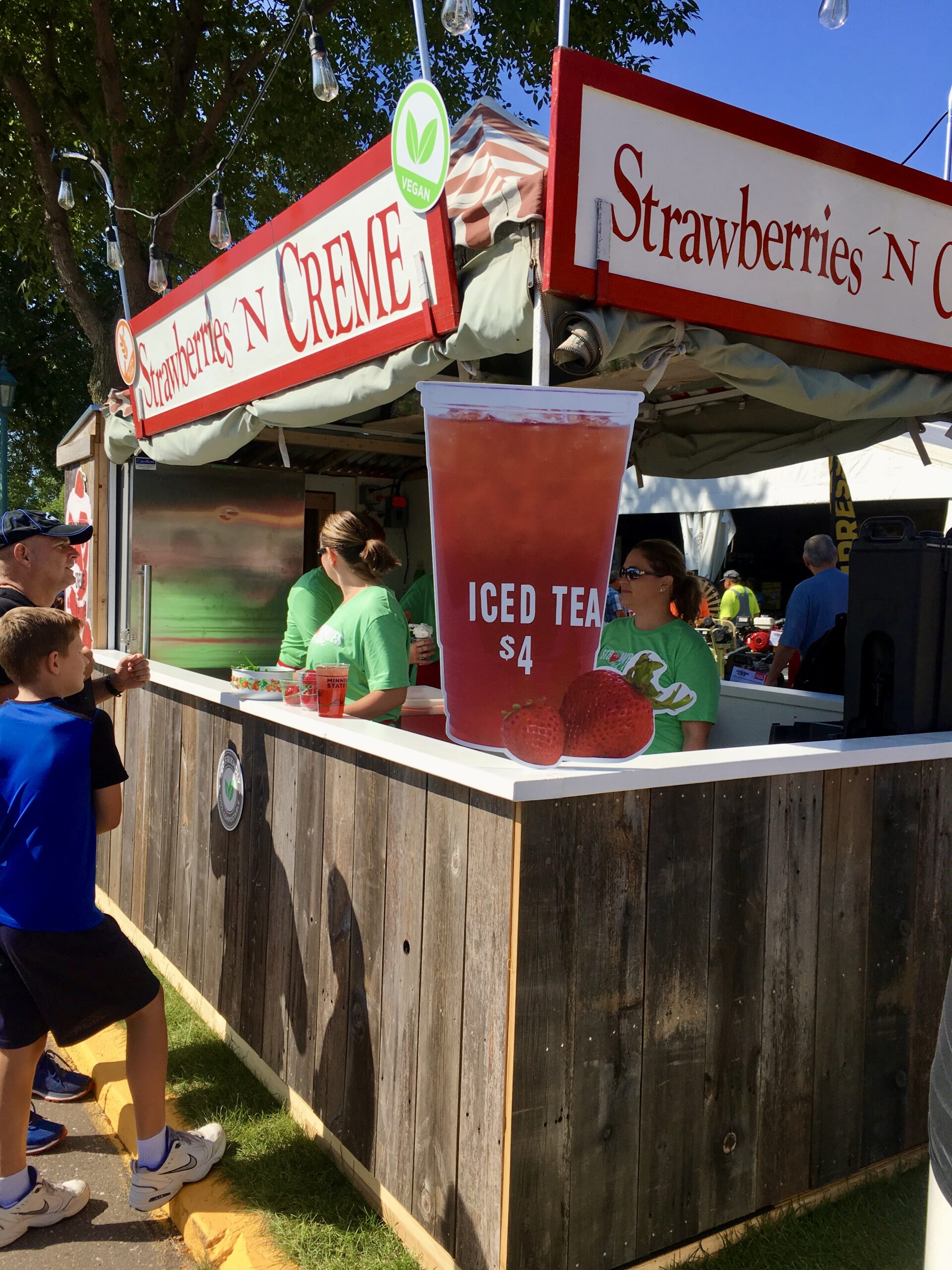
Their first State Fair season confirmed what they had already begun to understand. A product alone would not be enough. They needed systems capable of handling enormous volume in a short period of time.
They also needed a team that could remain positive when the temperature climbed, rain poured, supplies arrived late or the customer line stretched down the street.
The Work Behind a Simple Parfait
The cream served with the strawberries is coconut-based and prepared fresh throughout the day. Kelly says the average time between mixing the cream and serving it is about two and a half hours.
The strawberries require an entirely separate system.

During the State Fair, a daily shipment arrives through their food distributor. The fruit generally comes from Southern California, where late August aligns with peak production.
The berries are then taken to a church with a commercial kitchen, refrigerator space and a team of volunteers who wash and prepare them.
Kelly and John pay the church by the pound. The arrangement has generated thousands of dollars for the congregation, helping fund projects including a roof replacement. Volunteers also use berries too soft for serving to make jam and other products for their fall festival.
“It is such a great relationship,” Kelly says. “They are happy to be there, and it has become a significant source of income for the church.”
The partnership is essential because even a well-planned supply chain can go sideways.
A truck once suffered a wheel failure on the opening day of the fair, leaving volunteers waiting for hours. Another year, thousands of pounds of organic strawberries arrived that could not withstand the handling and cleaning process.
Kelly’s relationships with the distributor and suppliers helped resolve those problems quickly.
The experience has taught her that the economics of fair food are far more complicated than sales totals suggest.
Vendors pay for space, utilities, storage, parking, equipment, labor, taxes and a share of sales. They also build a temporary restaurant capable of handling extraordinary demand, only to dismantle it after 12 days.
“You turn the machine on once a year,” Kelly says. “It is like opening a brick-and-mortar kitchen for 12 days.”
Culture Under Pressure
Kelly expected her HR background to help with hiring and scheduling. She did not anticipate how central it would become to the business.
The operation depends on a temporary workforce, including many young employees working their first jobs. Kelly enjoys identifying their strengths, placing them in the right roles and watching them develop over several seasons.
“Finding a seat for every person is one of my favorite parts,” she says. “You might have someone who is shy, someone who is great at sales or someone who needs encouragement. You help them find what they are good at.”
Her expectations are clear.
Employees must treat customers and one another with respect, especially during the most difficult moments.
Kelly often returns to the leadership maxim that culture eats strategy for breakfast. She once considered the phrase corporate jargon. The fair changed her mind.
“When it is pouring rain and we have to unload berries, or it is 105 degrees in the shade and there are 1,000 people in line, culture is what gets people to give more than they thought they could give,” she says.
Employees need to feel supported, included and connected to the larger effort. Those who cannot contribute to that environment do not return.
Kelly’s language about the standard is more direct than most corporate handbooks.
“There are no assholes and no mean girls,” she says.
John, she jokes, is the person most frequently reminded of the rule.
The line gets a laugh, but the expectation behind it is serious. Kelly spent much of her career observing how poor behavior erodes organizations. In this business, she and John have the authority to create something different.
“That is what I am most proud of,” she says. “Building a culture I can control.”
From a Side Item to a Second Business
Loon Lake Iced Tea began because customers needed something to drink.
When Kelly and John purchased the strawberry booth, they considered adding bottled water or soda. Instead, they decided to brew strawberry iced tea.
It began as a side item at the 2018 Waseca County Fair.
When they reached the State Fair in 2019, they priced it aggressively and secured a place in the Blue Ribbon Bargain Book with a buy-one, get-one offer. The promotion encouraged customers to try the tea and helped it develop a following.
Back in Waseca, Kelly and John expanded the idea into a separate stand called Johnny G’s, named for John. They tested multiple flavors, refill programs and compostable cups while learning what customers liked.
The early setup was rudimentary. Tea was brewed in a church basement and served from temporary containers under a pop-up tent.
John initially resisted the idea, concerned about the amount of work required to build and operate another booth.
Then the tea began selling.
“He came out of that church basement and said, ‘I love you. This is the best thing ever,’” Kelly recalls, cleaning up his wording slightly for publication.
The success convinced them the tea could stand on its own.
When they pitched a second booth to the Minnesota State Fair, they presented several possible names and invited fair officials to help choose.
The winner was Loon Lake Iced Tea, named for the Waseca lake.
The brand also fit its eventual location on the fair’s north end, surrounded by businesses and imagery tied to Minnesota’s outdoor culture.
Kelly trusted the choice.
“They are some of the best marketing people in the country,” she says. “They picked it, and we never looked back.”
Innovation by Trial, Error and Taste Test
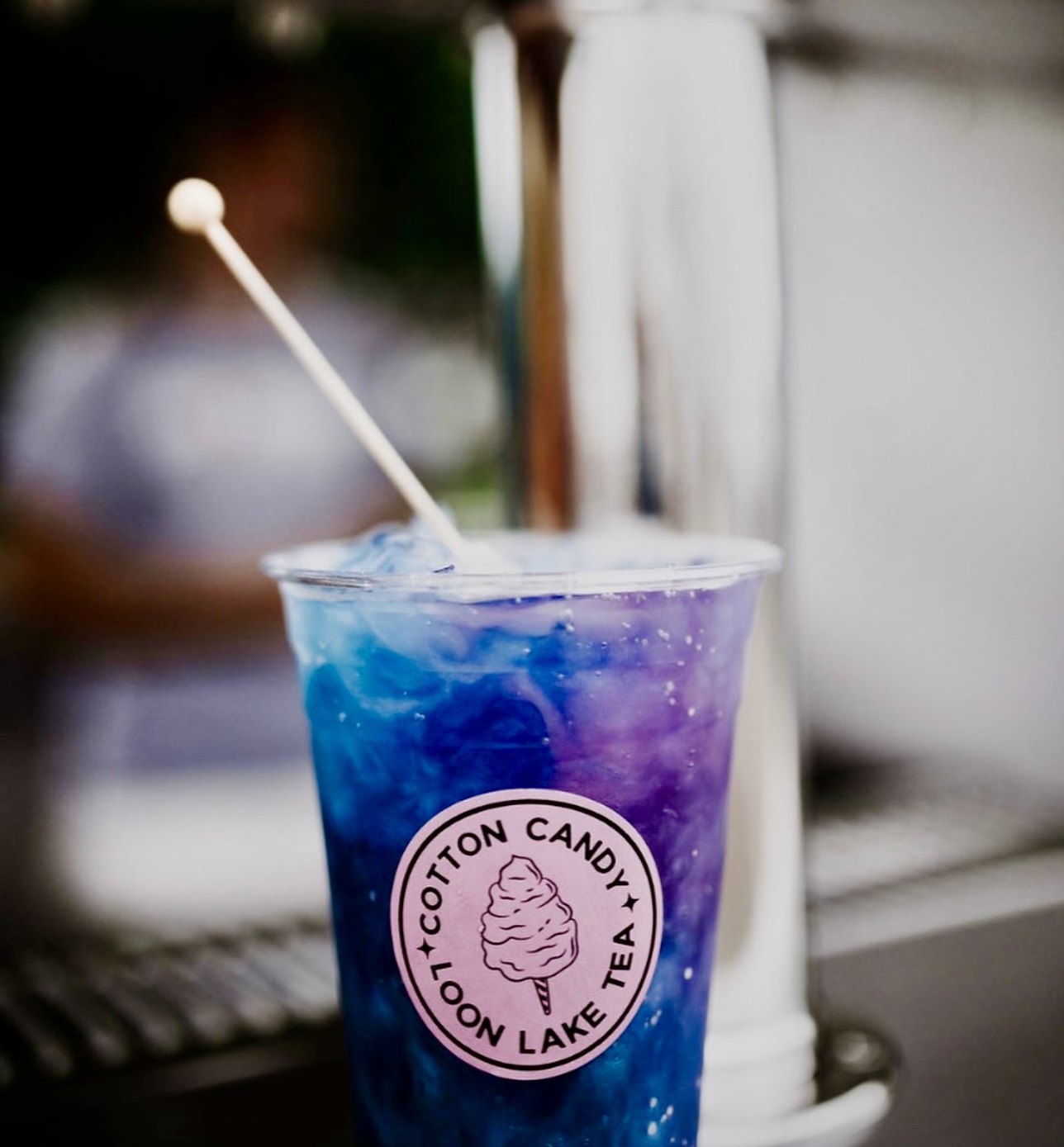
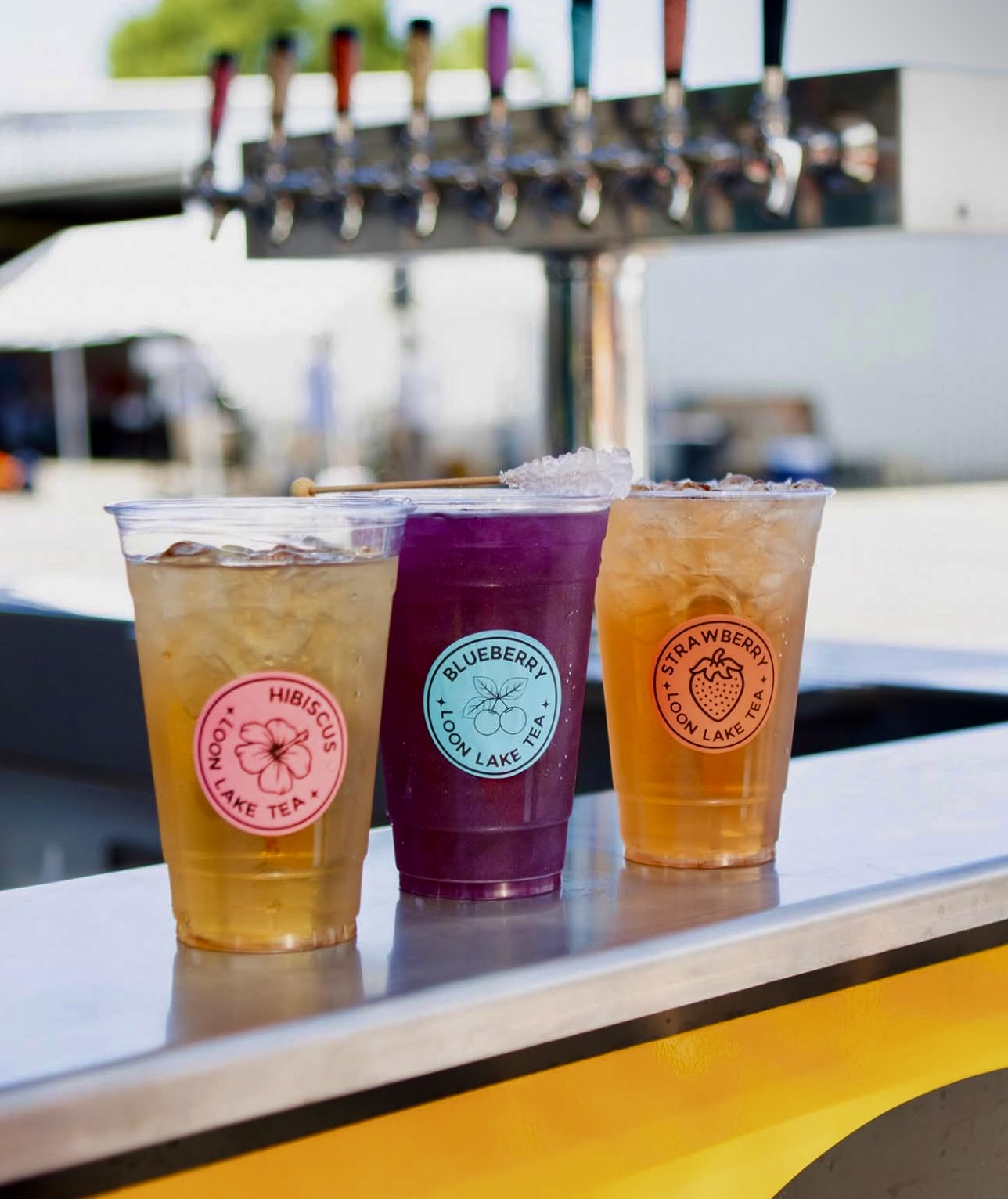
Loon Lake now offers eight tea flavors, with specialty varieties including cotton candy, dill pickle and caramel apple.
New ideas come from customers, friends, employees and family members. Kelly records them in a spreadsheet, then tests promising concepts through informal tastings.
Some ideas disappear quickly.
Lavender tea tasted too much like a spa. Bubble gum showed promise, but the team could not find the right finishing element.
Caramel apple nearly suffered the same fate.
The tart apple tea worked, but early attempts to add caramel became heavy or overpowering. Then a team member suggested caramel cold foam.
The foam floated above the tea and delivered the caramel flavor without burying the apple.
“It was perfect,” Kelly says.
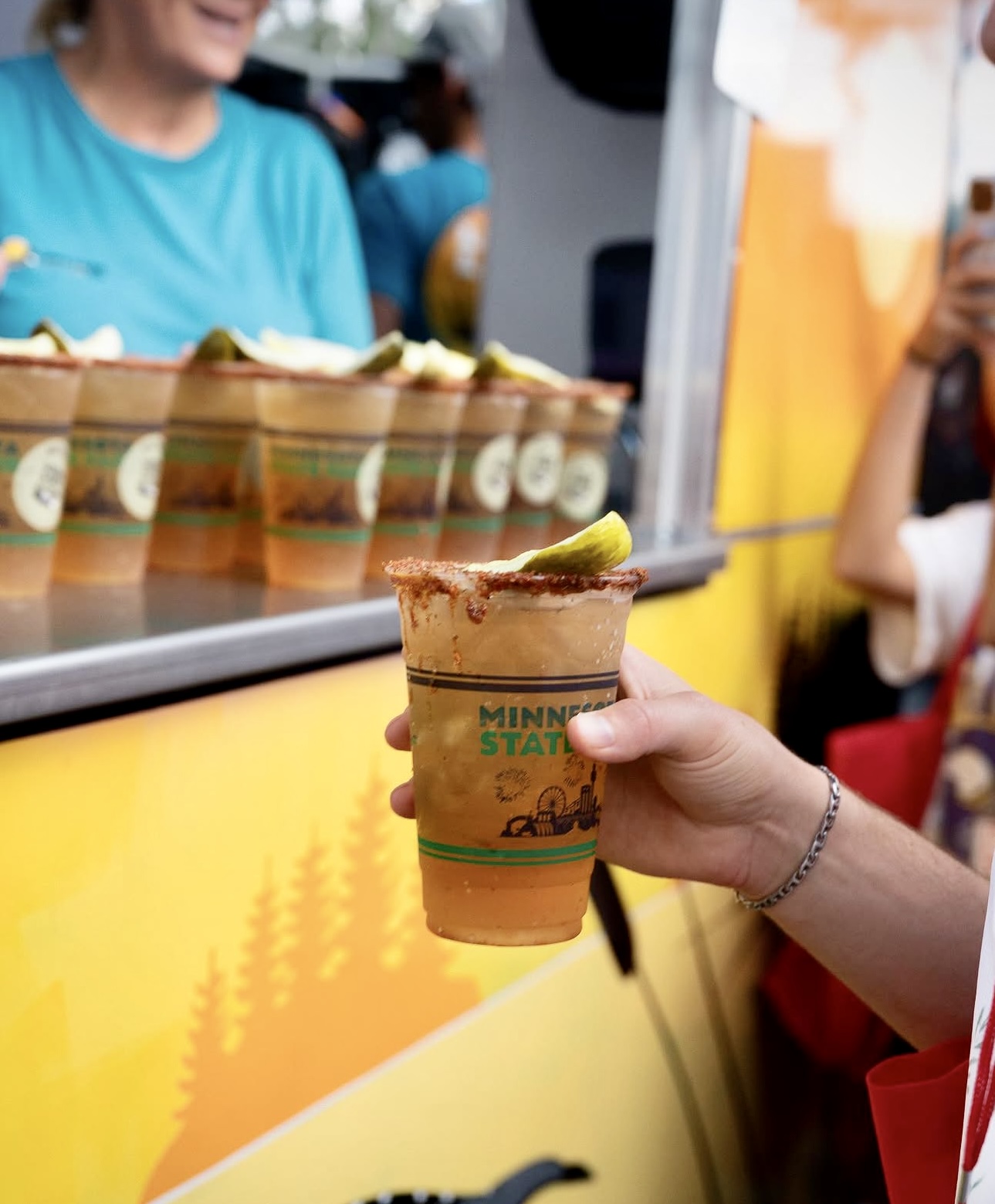
Dill pickle tea became another unlikely success.
On opening day last year, Sweet Martha arrived at the booth with chef and television personality Andrew Zimmern. Kelly initially assumed someone had come to report a problem.
Instead, they wanted to try the tea.
Zimmern later gave it an enthusiastic review.
“I was completely starstruck,” Kelly says. “My legs went weak.”
The recognition validated what the team had already learned in Waseca. Customers were willing to try unexpected products when the flavors were approachable and the experience was fun.
Reinventing the Original
The innovation has now returned to the business that started it all.
A State Fair redevelopment required Strawberries and Cream to move from its longtime location. Kelly initially viewed the change as a crisis.
Then she began looking for the opportunity inside it.
The new booth sits closer to Loon Lake Iced Tea and includes more room for refrigeration and operations. The move also prompted the team to develop a second primary menu item.
The result is a blueberry whip parfait topped with a vegan, gluten-free waffle chip.
The new product preserves the simplicity and freshness associated with the original booth while expanding what the business can become.
“We accidentally grew,” Kelly says.
The Strawberries and Cream logo now includes a blueberry, a small visual signal that a business known for one product has entered a new chapter.
Loon Lake continues exploring its own future. Kelly and John have considered brewing tea for restaurants and bars, distributing it in small kegs and eventually operating another State Fair location.
For now, they remain focused on the next fair, the next flavor and the next customer standing across the counter.
Kelly has spent much of her career studying systems, processes and people. At the fair, all three come together in a way she never expected.
The strawberries must arrive. The cream must be fresh. The tea must be brewed. The team must be ready.
Then the gates open, the customers arrive and the work becomes personal again.
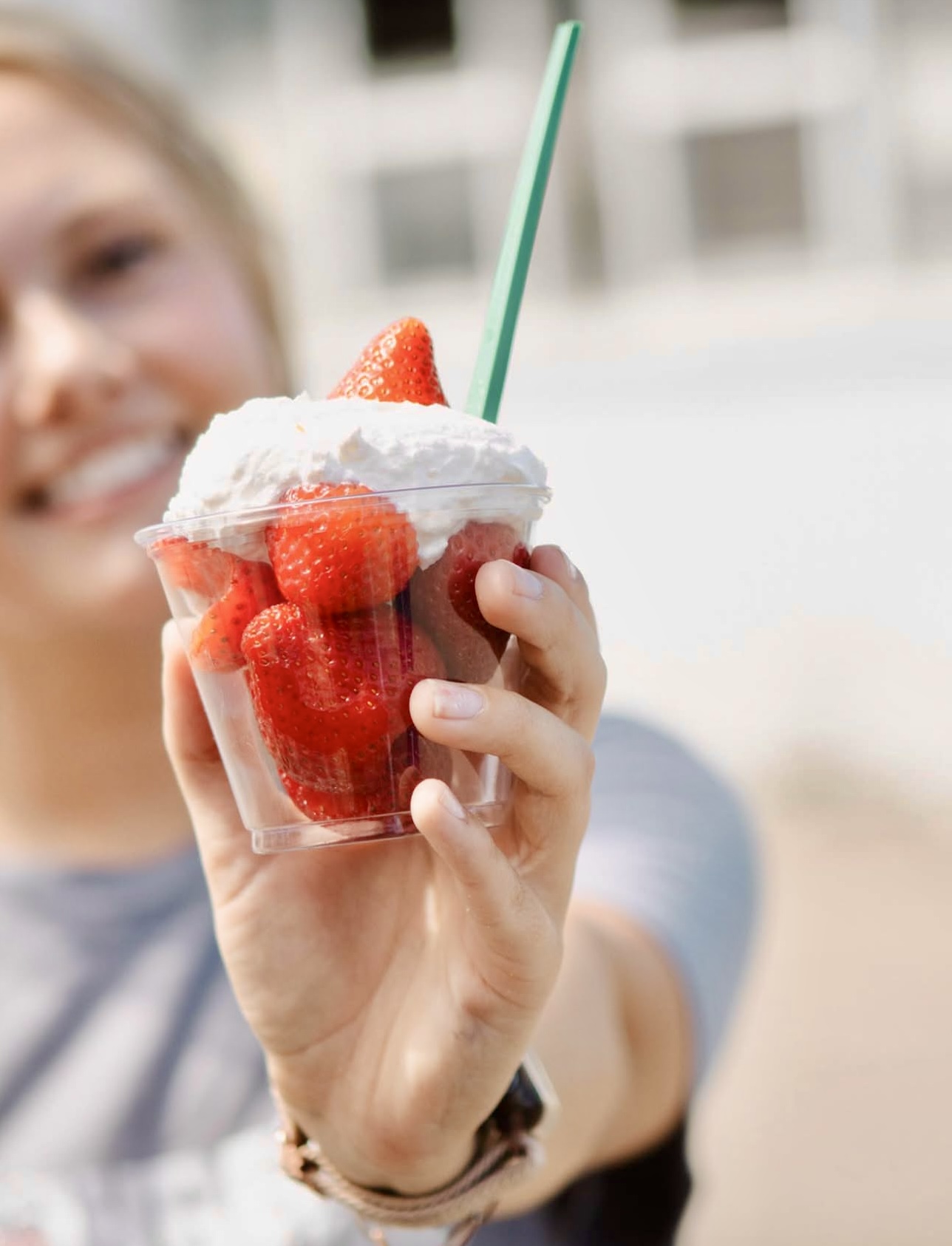
“Everyone’s happy at the fair,” Kelly says. “And if they’re not happy, you can usually make them happy.”
That may be the most accurate description of the business Kelly Miller and John Gotz have built. It sells strawberries and iced tea, but its real value is found in the moments created between the people behind the counter and the people standing in front of it.