

I ask my entrepreneurship students a simple question every semester: Who are the MoonDogs’ competitors?
The answers come fast. Other teams in the league. MSU athletics. The Minnesota Twins. All reasonable answers. Then I ask about the movie theater. I get funny looks. I ask about the county fair. I ask about concerts down at Vetter Stone Amphitheater. The room usually goes quiet for a bit.
This is the moment the lightbulb tends to go on. The MoonDogs are not really competing in the baseball business. They’re competing in the entertainment business. And once a business defines its competition that way, everything changes. The question is no longer, “How do we beat the other Northwoods League teams on the field?” The question becomes, “How do we convince a family to spend a Friday night at the ballpark instead of at the movies, instead of at the fair, instead of just staying home?”
Spend one evening at Franklin Rogers Park and you can see that thinking play out in real time.
“Cold beer here!”
Stunt Monkey’s call echoes through the grandstand on a warm summer evening, and it’s worth pausing on that moment because it’s really a small transaction taking place inside a much bigger one. The beer sale. The popcorn and hot dog at the concession stand. The corporate outing in the Dog Pound. Each is a data point in the economic case for a ballpark, even if nobody in the stands is thinking about it that way. Most people aren’t there for the box score. They’re there for the experience.
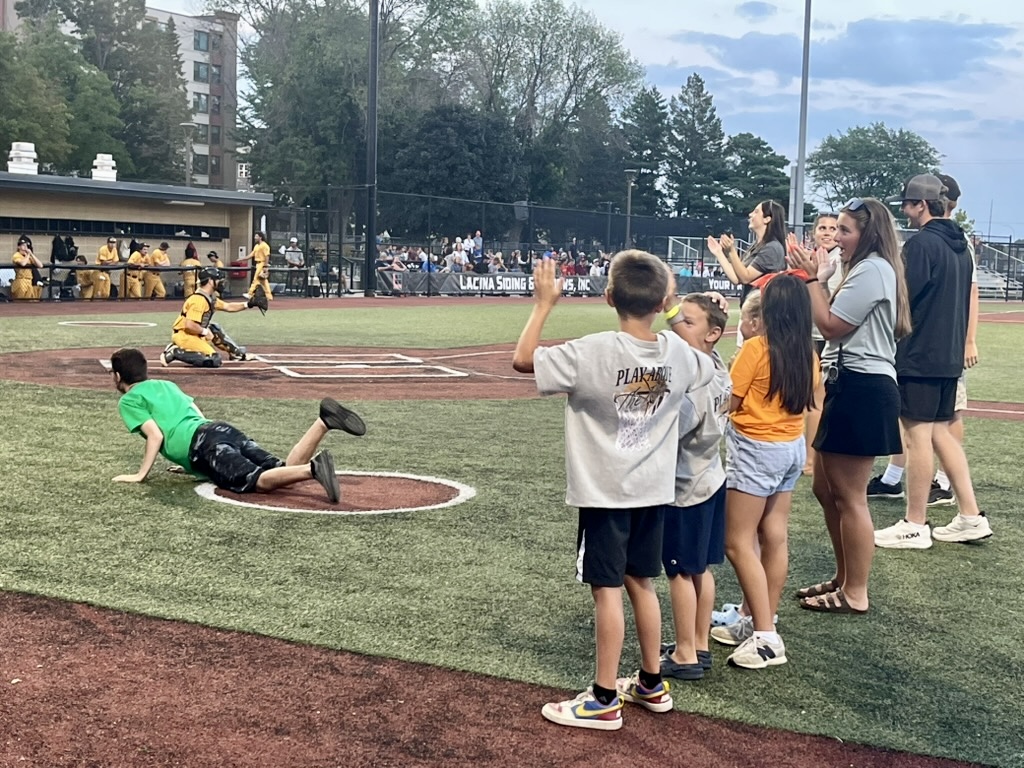
The fence signs count too. So do the sponsored between-inning promotions. Then there’s the foul ball chased down as a souvenir. That ball costs the organization about six dollars, making it an expense on the books. But it’s also a memory a child carries home, creating its own kind of return on investment.
The money moves in both directions, and that’s really the point.
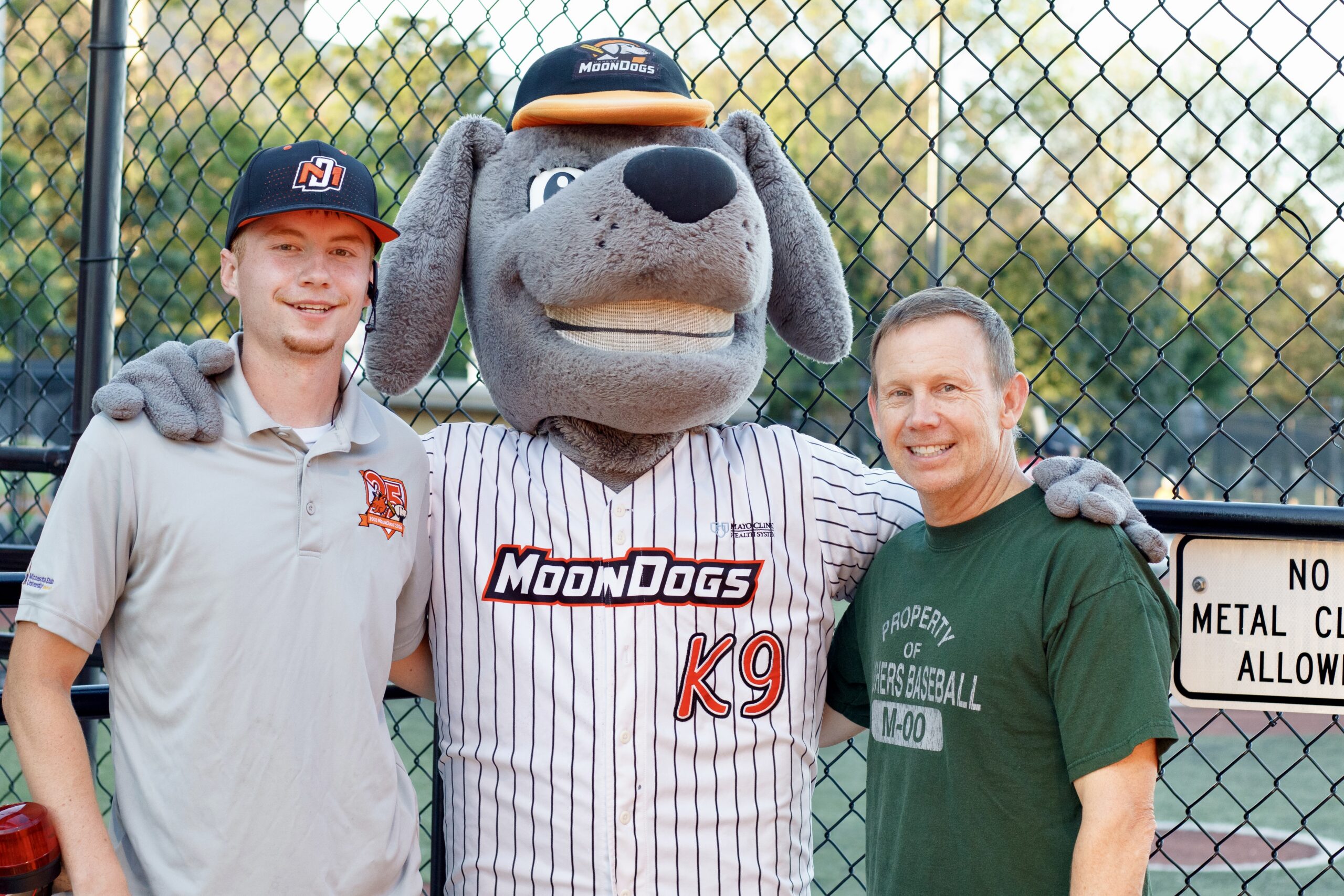
MoonDogs General Manager Walker Reiger knows this well.
“People come to the ballpark for baseball, but they come back for the experience. The theme nights, the between-inning fun, the food, the music, and the feeling that the whole evening was designed to entertain the entire family, not just the hard-core fan.”
Two Teams, One Field
Franklin Rogers Park isn’t just home to the MoonDogs. It also hosts the Habaneros, the organization’s women’s fastpitch softball team. The MoonDogs play 36 home games each summer. The Habaneros add another 21. Between the two schedules, the ballpark rarely sits empty.
Running both teams takes a surprisingly lean operation supported by part-time employees, interns, and seasonal staff. More than 25 concession workers—primarily local high school and college students—along with 17 interns keep game days running. The organization also staffs concessions for other events at the park, creating additional shifts and income throughout the season.
The Supply Chain Behind the Scoreboard
None of that concession revenue happens without a supply chain running through Mankato businesses most fans never think about. Food comes from The MTRY. Uniforms and branded apparel are printed locally by B. Stark. Neither company’s name appears on the box score, but both depend on the ballpark’s schedule just as much as the concession workers do.
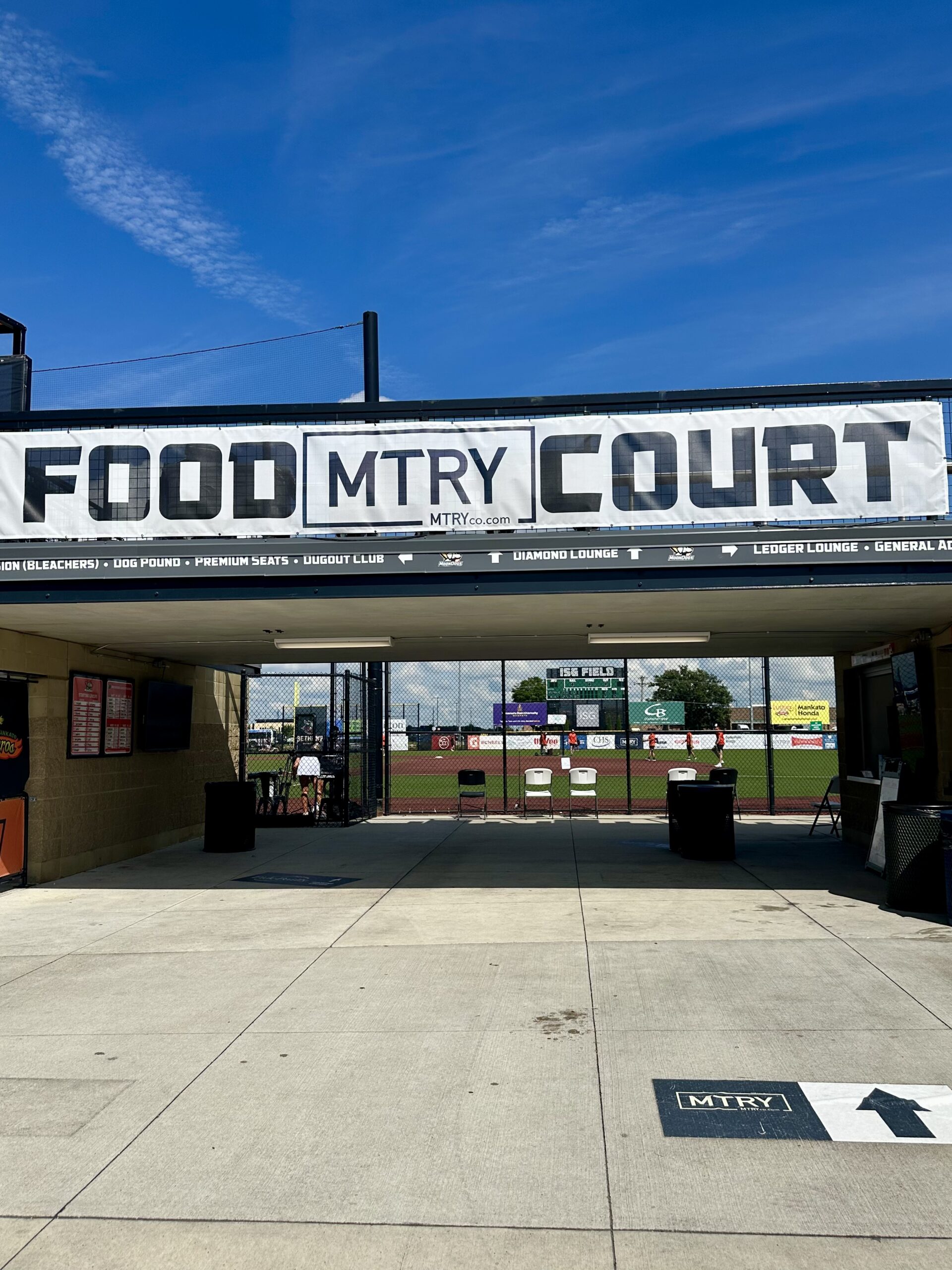
Economists call this the multiplier effect. A dollar spent at the ballpark doesn’t stay there. It flows to local suppliers, into employee paychecks, and back through the regional economy.
What It Costs to Bring a Team to Town
Hosting a Northwoods League opponent isn’t inexpensive. The MoonDogs cover hotels and meals for visiting baseball teams of roughly 30 people and visiting softball teams of about 20, while also feeding their own players after every home game. Add in buses, uniforms, equipment, livestream production, broadcasters, camera operators, and gameday staff, and substantial expenses are already in motion long before the first ticket is sold.
The players contribute to the local economy as well. Living with host families throughout the summer, they buy groceries, fuel their cars, and eat at local restaurants, creating the same kind of ripple effect generated by visiting fans—only over an entire season instead of a single weekend.
That same principle scales up ten minutes down the road.
Down the Road at Caswell
Drive ten minutes from Franklin Rogers Park and you’ll find a different version of the same story playing out on a bigger scale. Caswell Sports in North Mankato doesn’t have a single marquee team the way the MoonDogs do. Instead, it runs on volume, hosting dozens of youth baseball and softball tournaments each year while drawing teams from across the Midwest—and occasionally beyond.
“Sports tourism ROI is not confined to Caswell Park,” North Mankato Mayor Scott Carlson said. “It reaches hotels, restaurants, and other retailers. This creates a community-wide return that far exceeds just the concession stand at Caswell.”
The numbers reinforce that point. Caswell generated an estimated $12 million in economic impact in 2025 while attracting roughly 35,000 to 55,000 visitors across approximately 35 tournaments. The Minnesota State High School League softball tournament alone has been estimated to generate nearly $1.8 million in regional economic impact.
Greater Mankato Growth’s Director of Sports Tourism, Joy Leafblad, works year-round to bring tournaments and events that keep visitors—and their spending—flowing into the region.
“The impact of sports tournaments extends well beyond the playing field,” she said. “Visit Mankato supports event organizers through hotel and venue partnerships, welcome resources that highlight our restaurants and attractions, and event grants that help offset tournament costs, ensuring these events continue to drive tourism and economic growth in our community.”
Beyond the Dollars
None of this explains why a kid chases a foul ball into the parking lot like it’s the ball that won the World Series. The economics matter, but they aren’t the whole story.
Research on community sports consistently finds effects that never show up in an economic impact report: stronger social ties, more volunteerism, kids who do better in school and feel more connected to the place they grew up. Youth sports participation, in particular, is linked to better academic performance and higher civic engagement—the kind of thing that doesn’t move a hotel-tax spreadsheet but shapes a community all the same.
The host family tradition captures this best. Players live with local families for the summer not as paying tenants but as guests, and the relationships often outlast the season by years. Many hosts tell the same story: driving to Wrigley Field years later to watch a former MoonDog play for the Cubs, or still exchanging birthday messages with a player long after he left Mankato.
“MoonDog and Habanero host families do more than open a door; they open the life of a community. Players get support, families get a role model in the house, and both sides gain the kind of connection that still matters long after the season ends,” Reiger said.
Where It’s Headed
Back in my classroom, once the students get past “Who beats the MoonDogs on the field?” they usually land somewhere better: What does Mankato offer people that they can’t get anywhere else, and who’s competing for that same attention?
Visit Mankato is already asking that question at a regional scale. Its five-year plan names sports tourism as one of five strategic priorities through 2031, right alongside conventions and leisure travel, which tells you the city isn’t treating this as a summer hobby. It’s treating it as infrastructure.
The MoonDogs, the Habaneros, and Caswell’s tournament calendar all run on the same underlying bet: baseball and softball aren’t really the product. The summer night out is the product, and the town that understands that gets to keep a little more of what visitors spend, along with something much harder to measure—a kid who grows up thinking Mankato is a pretty cool place to live.