


At 23, the Lime Valley Advertising digital marketing specialist has built a broad creative toolkit. Now he is applying it to an ambitious card game designed to become something larger.
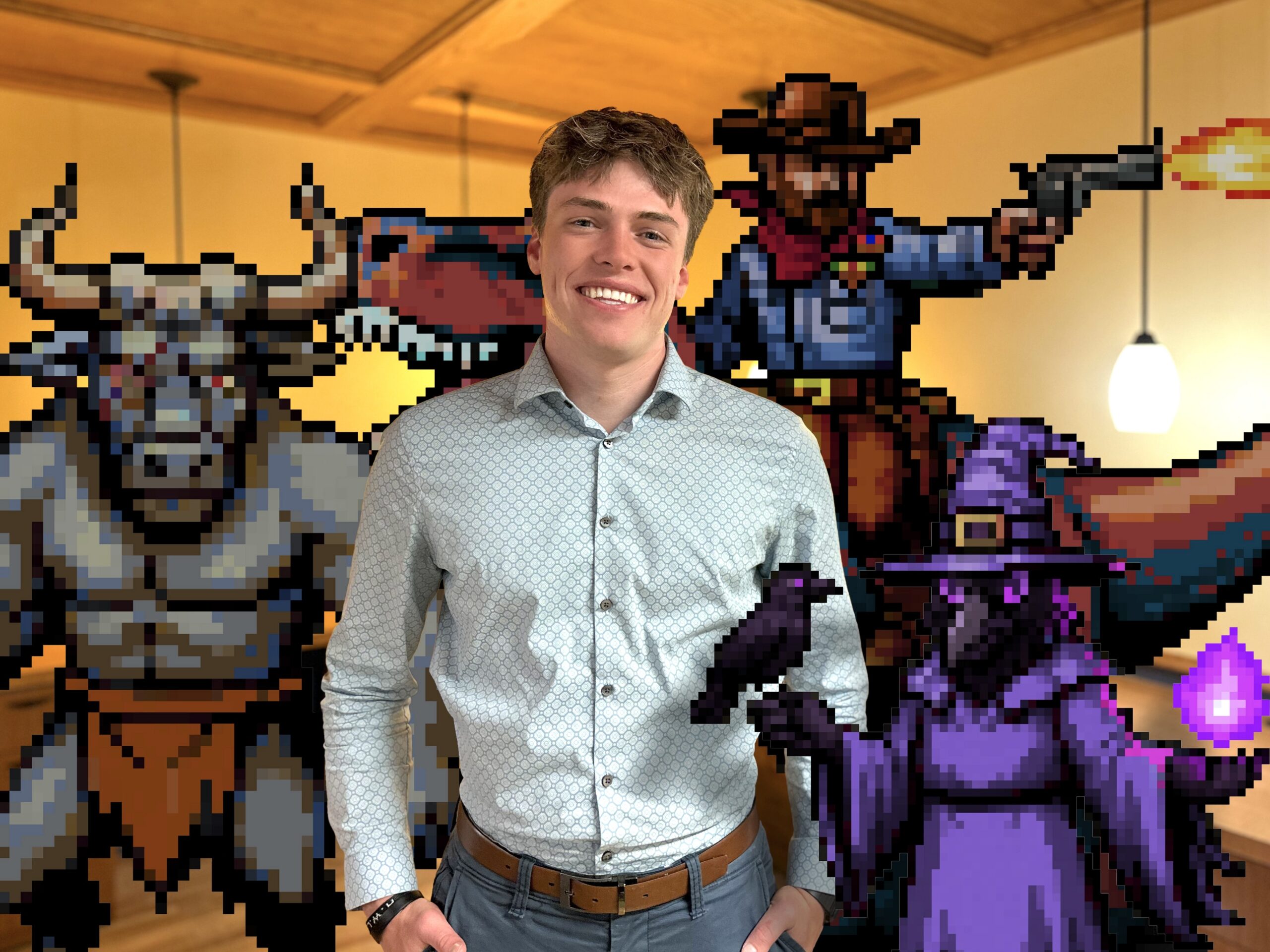
Photos by Molly Byron
Cody Pithan describes himself as a human Swiss Army knife.
At Lime Valley Advertising, he manages digital campaigns, edits video and creates motion graphics. Outside of work, he is designing a card game, building an interactive website and writing a mystery that unfolds through clues.
Two years ago, he would not have known how to build any of it.
Today, he believes he can.
“I’ve kind of hit this point where it’s the point of no return,” Pithan says. “I know how to do just about every single thing that is required to bring this vision to life.”
That confidence came through curiosity, criticism and a willingness to learn. The challenge now is pairing that range with something that once proved harder for him: follow-through.
This time, he believes he has found the project worth finishing.
A Creative Path
Pithan grew up in the Mankato area and graduated from St. Clair High School.
Creativity was a constant. He drew during family road trips, built with LEGO bricks, made stop-motion videos and later produced homemade movies with friends.
“I’ve always just felt like a creative guy,” he says. “I loved making movies. I loved telling stories.”
When COVID-19 disrupted his senior year, Pithan was not certain what he wanted to pursue in college. He enrolled at Minnesota State University, Mankato, beginning with a general business major before finding his way toward marketing.
The field gave him a practical outlet for storytelling and visual work. He later added a graphic design minor, where graphic design professor Claudia Dubé challenged how he understood design and his own abilities.
“She humbled me tremendously,” Pithan says.
Dubé pushed him to think beyond what simply looked good and consider principles, usability and the audience. She also recognized his initiative and helped keep one particular project alive long after its original assignment ended.
The Project That Would Not Go Away
Pithan’s card game began as a design class project.
He created roughly 10 cards around a farm-inspired theme. As he worked, the cards began connecting through characters and story.
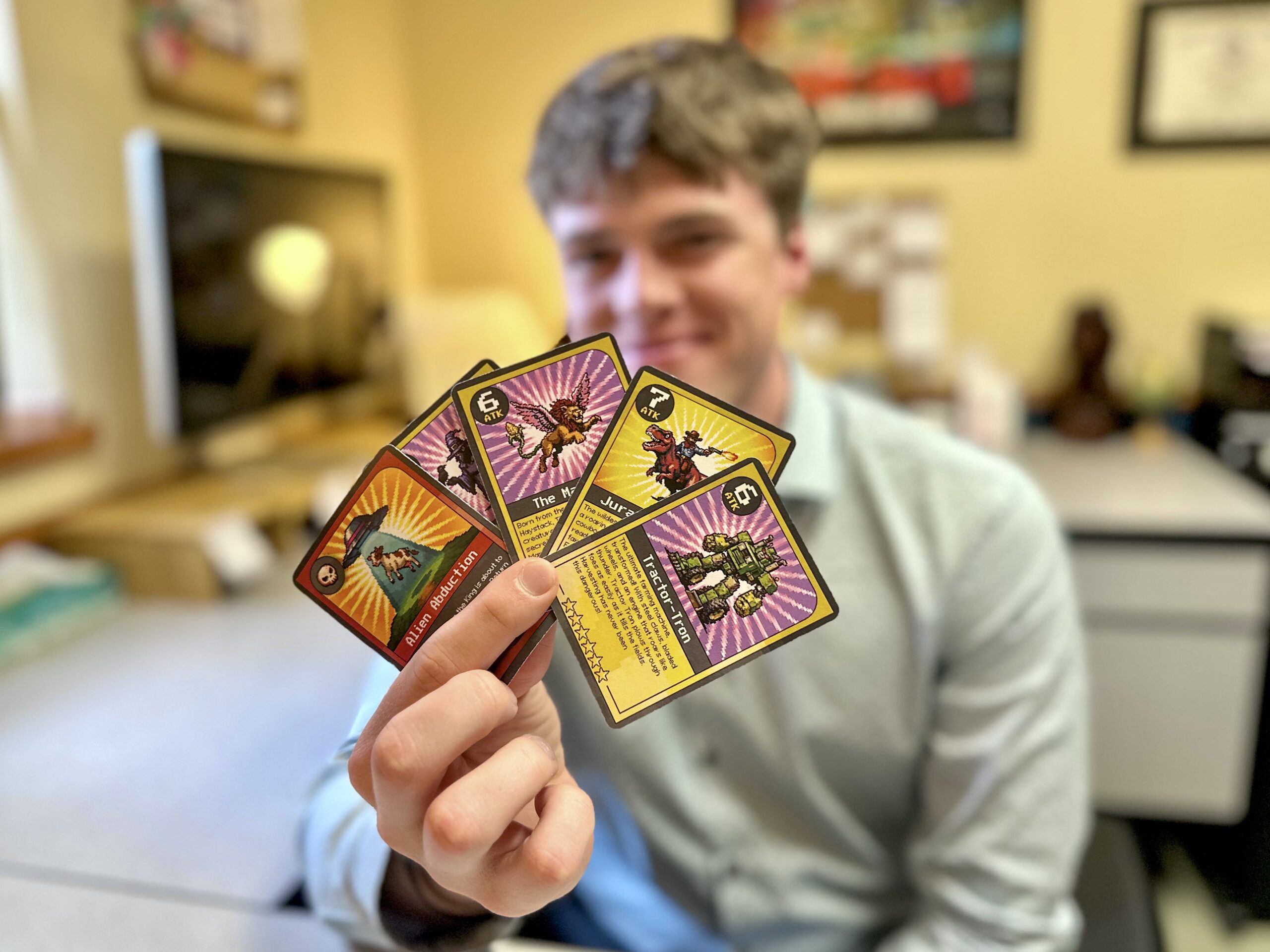
“I realized I was really enjoying it for the storytelling aspect,” he says. “I was building this story through the cards.”
After the assignment, the idea began to fade. Then Dubé nominated him to present it at MSU’s Undergraduate Research Symposium. He redesigned the cards and developed the concept further. When his momentum slowed again, she encouraged him to bring the project into a web design course.
Each new deadline gave the idea another life.
Pithan now describes the game as a combination of cheerful mid-century Americana and a darker farm mystery involving strange experiments, machinery, magic and the hidden consequences of postwar science.
The game is intended to work as an accessible experience for four to eight players. Someone should be able to learn it in about 15 minutes without knowing anything about the larger story.
For those who want more, however, the cards are only the entry point.
Pithan is building a fictional world centered on a mysterious scientist named Dr. Hayfield. A companion website will contain recordings, documents, ciphers, videos and retro-style games that allow users to investigate the story.
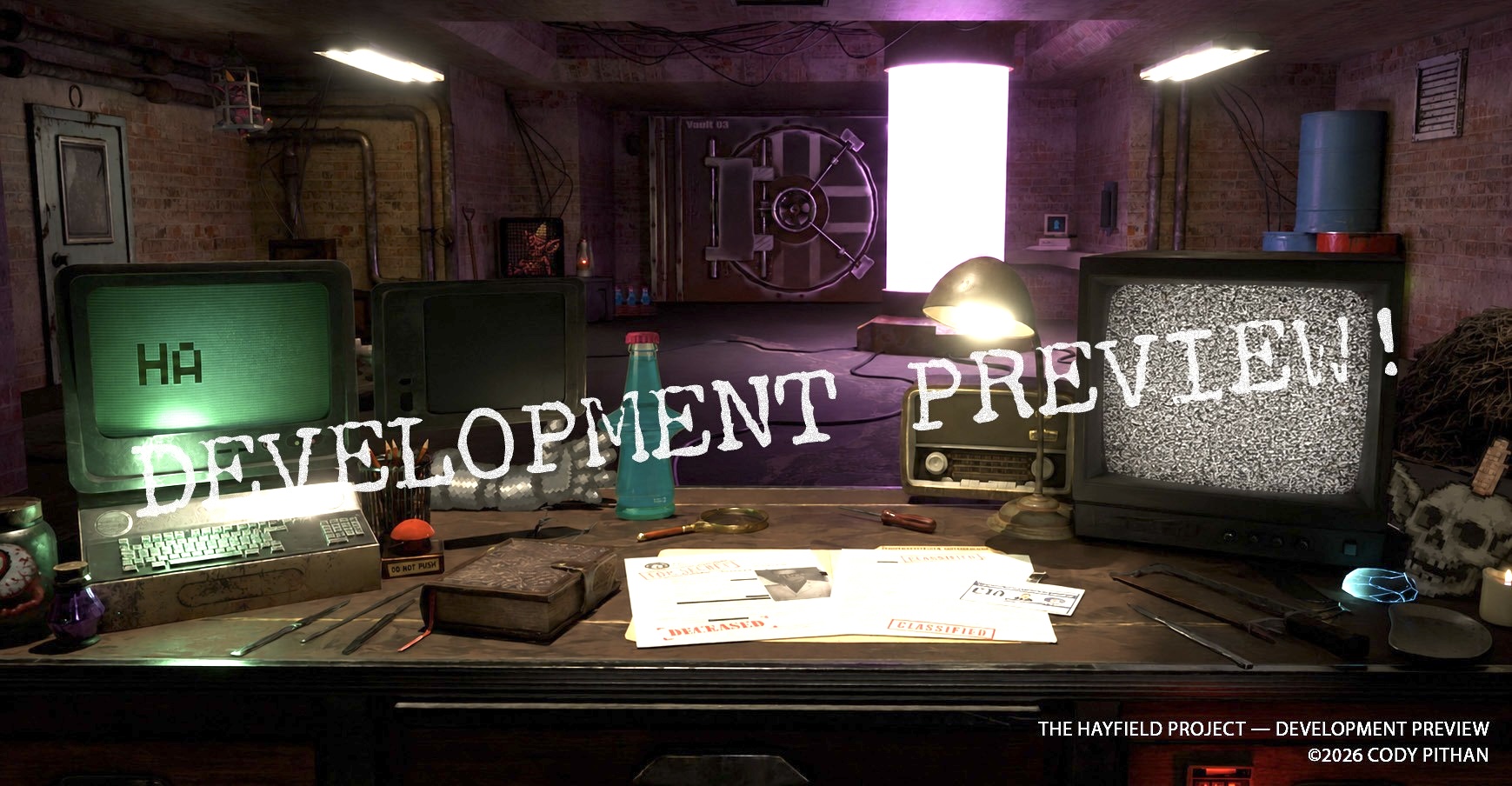
The narrative will not unfold in a straight line. Players may discover one clue before understanding the event or character connected to it. Over time, they will piece the fragments together.
“I have to make this one big story with subplots, break it all apart and figure out how I can hide clues that people can eventually piece together,” Pithan says.
He wants to leave room for interpretation, allowing fans to debate what happened, trade theories and revisit the material for details they missed.
“That’s where you build communities,” he says. “When people have their own things to add to it, that’s when you create that community.”
Learning to Slow Down
Pithan’s first instinct was to finish the project quickly. Over time, the game taught him patience.
“Before, I just wanted to get it done and get it out there as soon as possible,” he says. “Now I’ve grown this patience where I just want to do it right.”
That shift matters because Pithan admits he has often struggled to carry creative projects through to completion. He has experimented with several creative outlets, only to lose momentum.
The card game feels different because of how far it has developed and how much he has invested in making it real.
“I’ve done so much, and I feel like I’m actually capable of turning this into something,” he says. “I can’t turn back now.”
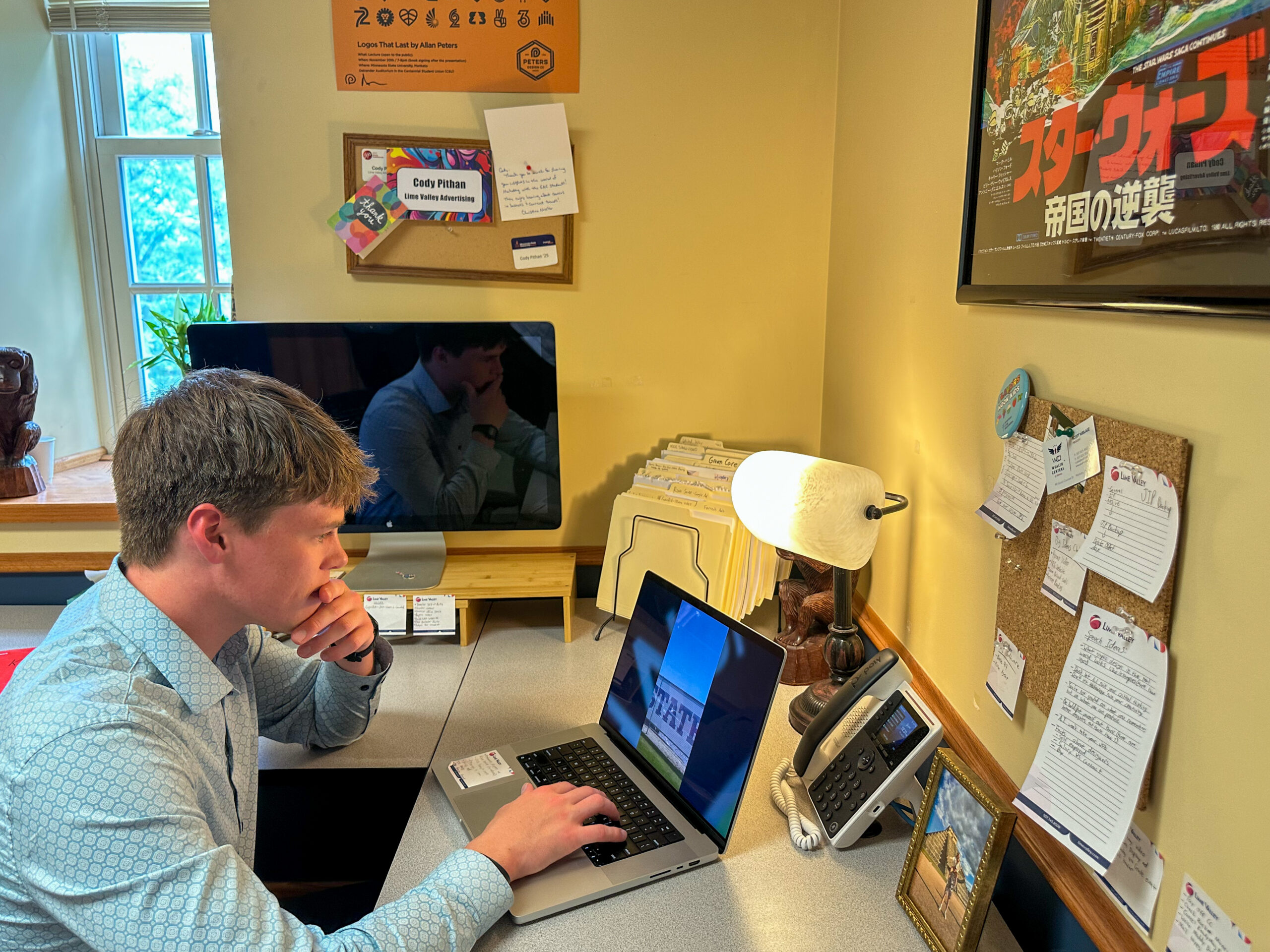
His immediate goal is to prepare the project for MSU’s Big Ideas Challenge, where prize money and visibility could support prototypes, testing and production. Longer term, he imagines crowdfunding, online sales, expansion packs and other storytelling formats.
His largest ambition is a film or television adaptation.
He knows that is a distant possibility. He sees little reason to dream smaller.
Asking the Right Question
Pithan took a similarly direct approach when pursuing his first professional job.
During his final year at MSU, he attended business events, became active on LinkedIn and contacted local professionals for informational interviews. He asked them to review his portfolio, critique his work and explain how they had built their careers.
One of those professionals was Brian Maciej, a leader at Lime Valley Advertising, who spoke to a campus marketing organization.
When students were invited to ask questions, Pithan raised his hand.
“How do I work for you?” he asked.
The question drew a laugh and a general answer about working hard. Afterward, Maciej approached him privately, offered a business card and invited him to meet.
During that conversation, Maciej reviewed Pithan’s portfolio. As the meeting was ending, Pithan insisted on showing him the card game.
Once Maciej saw the website, artwork and larger concept, the conversation changed.
“He was like, ‘Whoa. This changes a lot,’” Pithan recalls.
Lime Valley later invited Pithan to apply for an opening. He interviewed for the role and joined the agency after graduating.
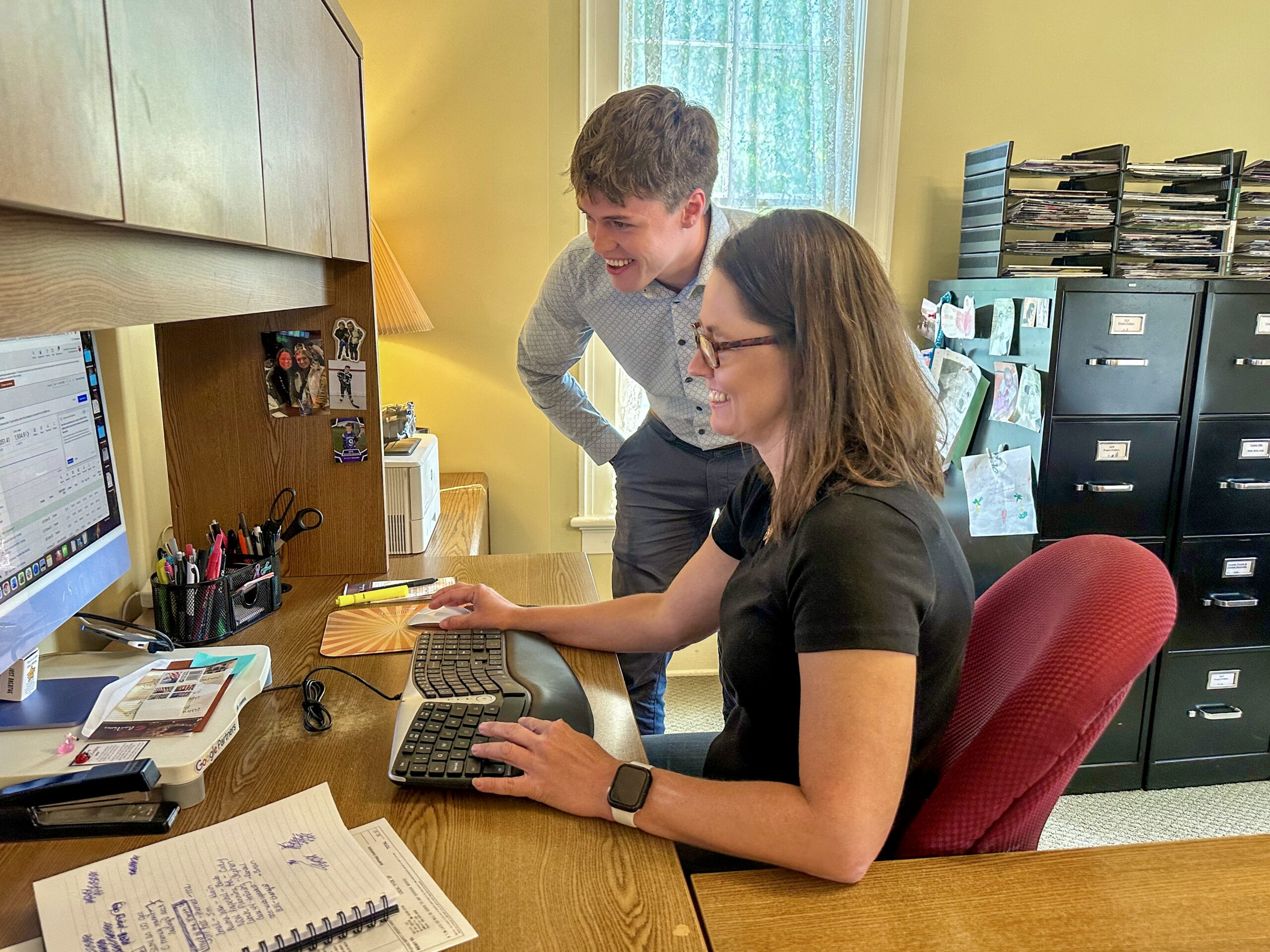
His primary responsibilities include Meta and Google advertising campaigns, but his broader abilities have made him useful across video, motion graphics and creative production.
Agency work suits him because each client brings a different audience, identity and problem to solve.
“I’m accelerating at a much quicker pace because I’m not constrained to one brand standard or one type of company,” he says.
The learning moves in both directions. Skills gained at Lime Valley strengthen the card game. Problems solved through the game expand what he can contribute at work.
“It’s like an echo chamber between my hobbies and my career,” Pithan says. “I learn something here, apply it to my game, learn something through the game and bring it back.”
Building Community
Pithan’s instinct to create extends beyond design.
During college, he and Brandon Jackson co-founded Hustle, a faith-based men’s group intended to offer a more approachable entry point than traditional campus ministries.
The meetings combined food, honest conversation and games. Pithan funded much of the first year himself, and attendance eventually grew to roughly 30 to 40 students on a typical night.
The experience taught him how to promote events, speak publicly and create environments where people wanted to participate.
“I just love bringing people together,” he says. “I saw that with Hustle, and I see it with my card game.”
That desire is one reason he chose to remain in Mankato after graduation.
Pithan believes young professionals often assume meaningful opportunities require moving to a larger city. His experience taught him that some of the best jobs are never publicly listed. They emerge through relationships.
“I like a more personal community where I can attend events and people recognize you,” he says. “There is almost more opportunity for growth when it is intentional through a smaller group.”
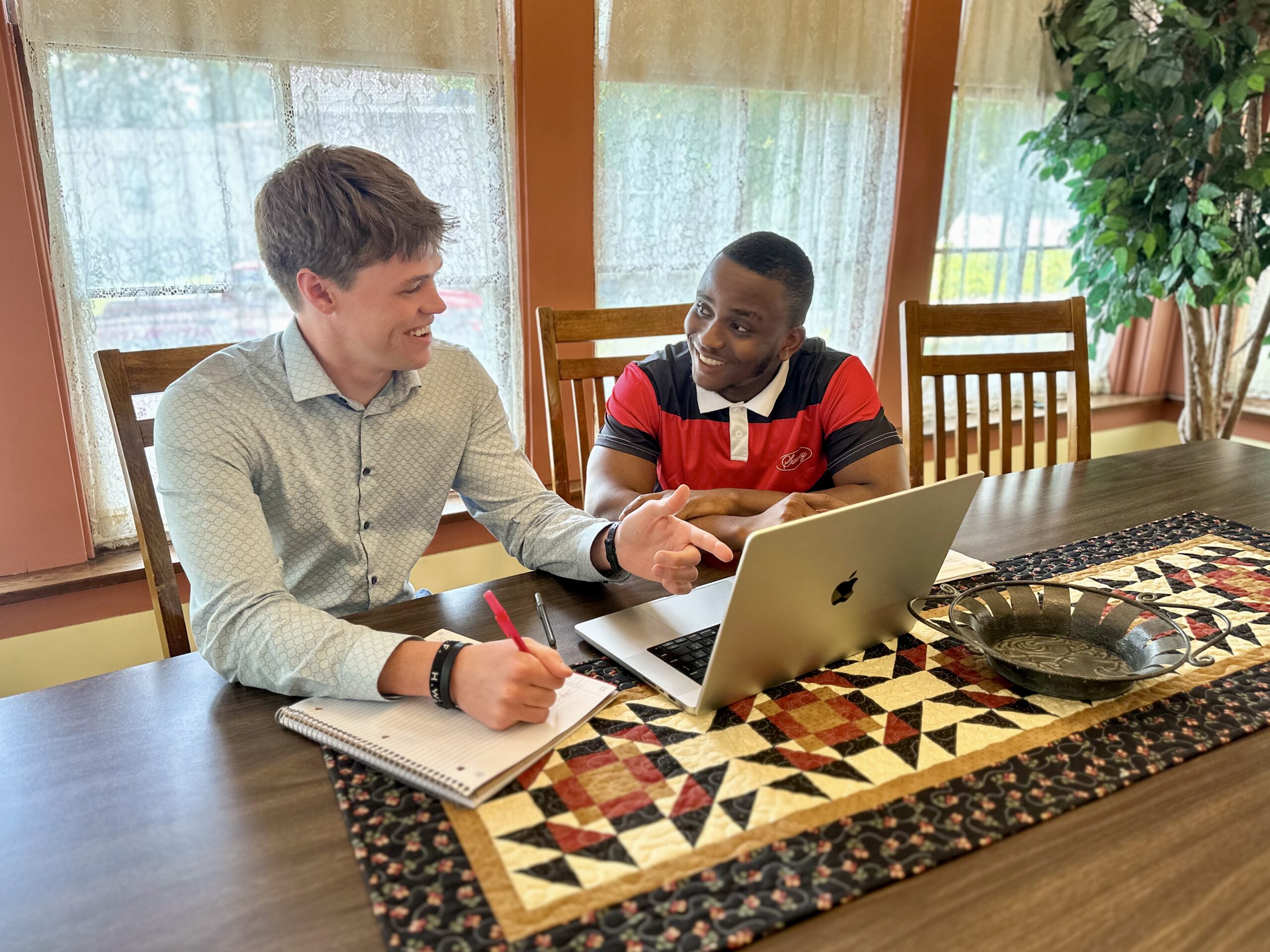
His advice to students and young professionals reflects the approach that opened doors for him: ask questions, be bold, meet people and share your work.
At 23, Pithan is still deciding where his creative abilities will ultimately lead.
The card game may become a business, a larger entertainment property or simply the project that taught him how to finish what he started.
Pithan intends to find out.
“I know how to make it happen now,” he says. “I have to see it through.”