

The first business I almost started taught me that every generation has a choice: protect what it inherits, or build on it.
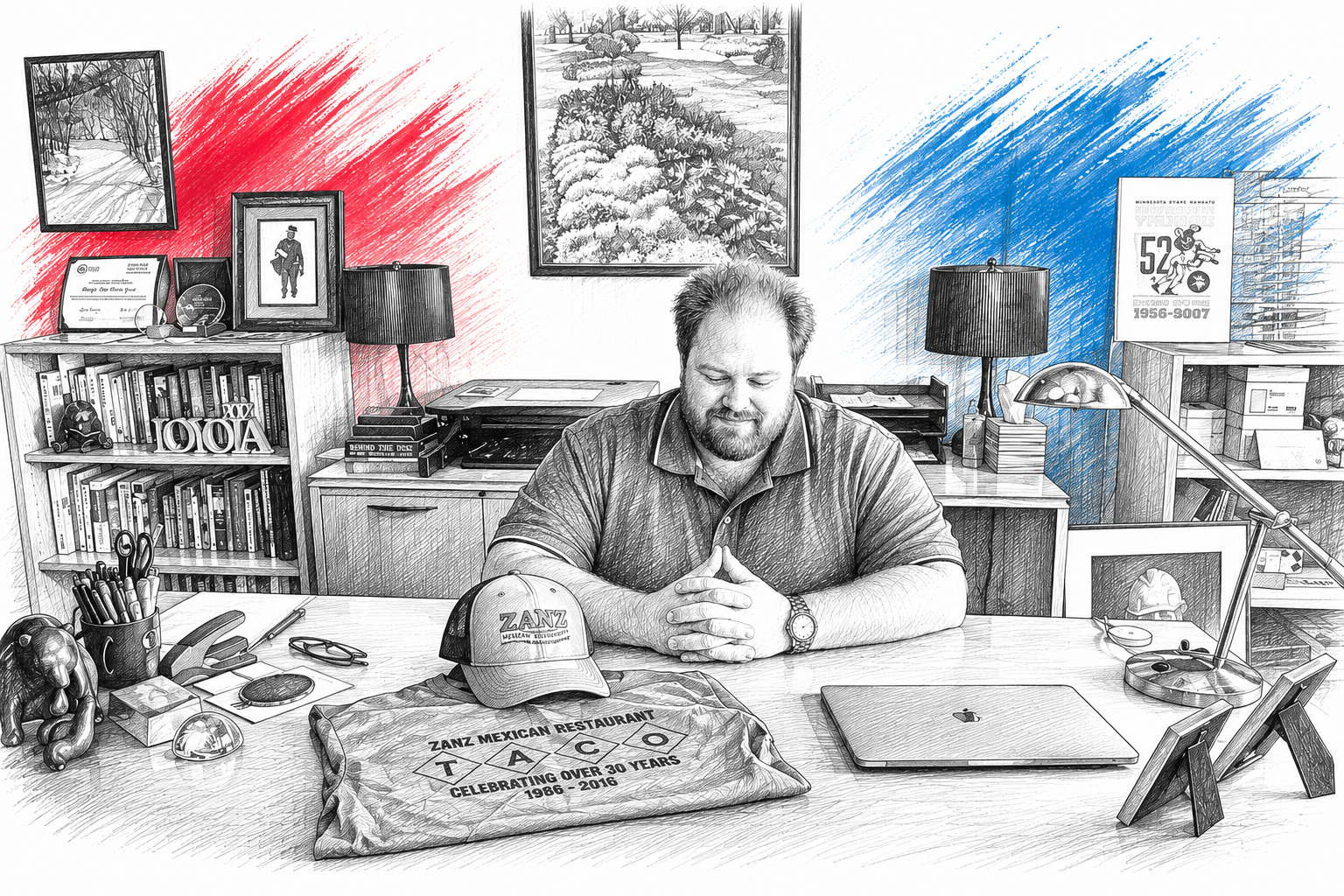
When I was sixteen years old, I threatened to steal my own family’s logo. To be fair, I thought I had a pretty good reason.
Growing up in my family’s business, Zanz Mexican Restaurant, I heard the same thing from customers over and over again.
“You should sell T-shirts.”
“I’d wear a Zanz hat.”
“You guys need merchandise.”
The demand seemed obvious to me. The problem was that my parents were busy running a restaurant.
Like most small business owners, they were consumed by the work that had to be done. There were customers to serve, employees to manage, orders to place and equipment to maintain. Selling apparel always felt like a good idea that would have to wait.
Then I got my driver’s license. More importantly, I got my first car, a maroon 1992 Oldsmobile Ninety Eight with the kind of trunk Detroit doesn’t build anymore.
For the first time, I had a place to store inventory and a way to transport it. In my sixteen year old mind, I had solved the problem.
One evening, after hearing yet another reason why we still weren’t selling shirts, I told my dad that if he wasn’t going to do it, I was going to bootleg the restaurant’s logo, print my own apparel and sell it out of the trunk of my car.
He laughed until he realized I wasn’t kidding.
Not long afterward, we started selling apparel.
Looking back, what strikes me isn’t that we eventually sold T-shirts. It’s that my dad and I were looking at the exact same business and seeing two very different futures. He wasn’t wrong. He was protecting something he and my mom had spent years building. He carried the weight of payroll, vendors, customers and a thousand decisions I was too young to appreciate.
I simply had the luxury of asking a different question. What else could this become?
As America celebrates its 250th anniversary, I’ve found myself coming back to that question.
Our history is filled with people who inherited farms, businesses, ideas and institutions. Some preserved them. Others expanded them. The people we remember most often managed to do both.
My parents didn’t give my sister Molly and me the restaurant. We bought it. What they gave us was something far more valuable than ownership. They gave us an example.
They taught us resilience in one of the toughest industries imaginable and demonstrated that trust is earned one customer at a time, year after year.
Our responsibility was never to replace what they built. It was to build on it.
It’s easy to explain why something can’t change. Markets shift. Industries evolve. Circumstances aren’t always fair. Those realities matter, but eventually they stop being explanations and start becoming excuses. Responsibility begins when we stop asking whose fault something is and start asking what we’re going to do next.
That’s what I’ve always admired about entrepreneurs. They see an opportunity, accept the responsibility that comes with pursuing it and get to work.
As I read through this month’s issue, one idea keeps surfacing. Every story is about someone who refused to accept that the current chapter had to be the final one.
Looking back, I’m glad I never started that business out of the trunk of my car. What I really started was a habit of asking a different question.
So I’ll leave you with the same question that started all of this. What else could this become?
What a cool story, Wes!