

Greater Mankato’s growth has always depended on more than plans, buildings, and big ideas. It depends on the relationships that help move them forward
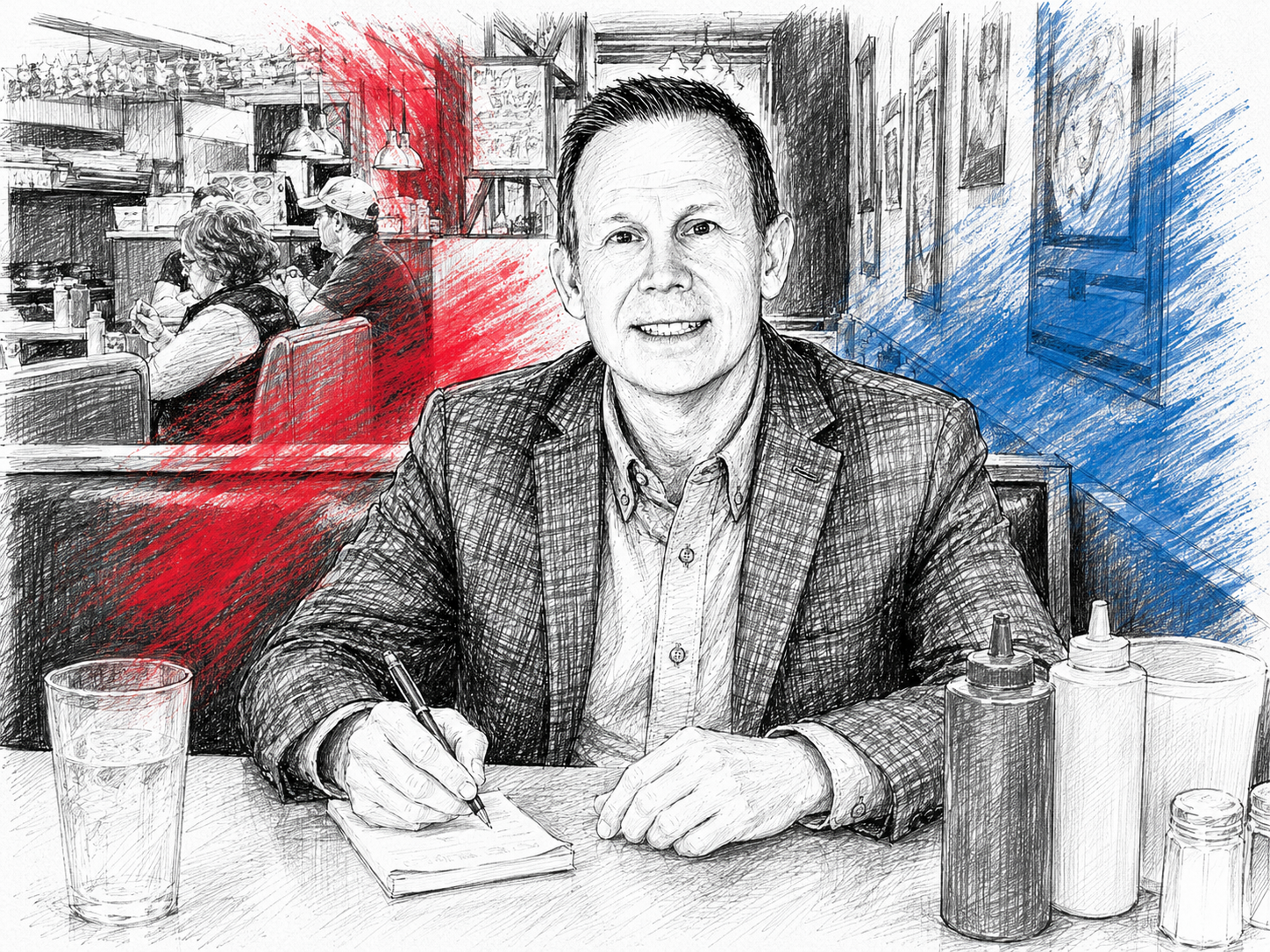
Sitting in the old Wagon Wheel café booth, I had no idea how many minutes had gone by since we each ordered two eggs over easy with bacon.
Story after story. One fun fact after another. And one person after another walking by saying hi with some comment to Fred.
And of course, he optimistically solicited each person, “Hey, thanks for picking up my tab today!”
No takers, but lots of smiles.
Fred Lutz always has a way of getting people to smile and connect.
Then the food came just as ordered, hand-delivered along with the story of the day by the owner. Not Wally or Kevin Haefner, but David Hruska, the owner of the Dam Store café, which is now located in the old Wagon Wheel location.
As many know, the Dam Store did not just happen to end up there after the Haefners closed the Wagon Wheel. It took numerous people and their connections in the community to make it happen after the flood.
I had the pleasure of interviewing Fred, along with a couple others, about the development of Greater Mankato for this column. It was 50 years ago when I moved to Mankato as a young kid. I have seen a lot of development and growth in Greater Mankato as well, but writing through the lens of other people shed some new light.
I was just a little punk having fun running around MSU’s lower campus, not paying attention to anything happening in this quietly growing city.
It was a fun time for Fred, too. Being an integral part of the tremendous growth in the community, he was able to bring a historical perspective of how we got to where we are now.
The Lutz family moved to Mankato when his father started a small bottling plant in downtown Mankato in 1946. Fred and his brother-in-law, Jim Lloyd, moved the company, Northland Beverage, up on the North Mankato hill in 1970 in order to build a larger production and distribution plant. They eventually sold to a Pepsi distributor in 1992, and the community is fortunate it is still there as a major employer in the region.
To people looking at the community from the surface level, they don’t see Mankato’s strength. Greater Mankato’s growth has always looked like new buildings, parks, bridges, campuses, businesses, and plans. But underneath those visible signs of progress are things less visible and more important: the relationships that connect people, resources, and opportunity.
Fred and his family could easily have packed up and moved on, but they continued to be very involved. Reminiscing on it all, he recalled the people, processes, and hard work that went into numerous initiatives that have kept Greater Mankato flourishing.
Back then, the Mankato Jaycees played a major role because it was a place for people to develop connections with the goal of making Mankato a better place to do business and live. Fred noted the interactions and engagement with each other grew friendships and trust. Members such as young business owners Glen Taylor, Howard Vetter, and Fritz Maes helped each other hone their interpersonal skills and create partnerships to make things happen. These are just a few who have left a mark within our community.
About every 20 years or so, starting in the 1960s, major initiatives were envisioned and initiated by business leaders to help guide and transform the community. First was the Urban Renewal of Minnesota, followed by Downtown/Front Street Mall in the middle to late 1970s, Act 2000, Envision 2020, and now Greater Mankato 2040: Transforming Tomorrow Together.
Yes, it can take 20 years for major visioning, planning, and constructing. Strong communities know things don’t happen overnight.
Greater Mankato 2040: Transforming Tomorrow Together
So once again, here we are today in the midst of visioning, planning, and building for 2040. That really sounds like a long way off, but it will be here before we know it. Just ask those who were on the front end of the other initiatives.
Business and community champions of the Envision 2020 initiative, such as John Kind, Pat Hentges, Tami Paulsen, and Jonathan Zierdt, worked with hundreds of stakeholders to help steer and develop great things we take for granted in the community today: Riverfront Park and Vetter Stone Amphitheater, mixed-use developments, VINE senior center, Children’s Museum, and the Fallenstein Field and Playground, to name a few.
I came across a quote worth noting from Kind, who served as the Envision 2020 co-chair. He credited the region’s “partnership mentality” as a key catalyst for the Greater Mankato region’s progress, emphasizing leaders’ ability to look beyond their own needs and focus on the broader community.
It is that “partnership mentality” that is a common thread noted by people in our region as to why Mankato has continued its growth, not only in population, but in the quality of amenities and infrastructure.
Envision 2020 also focused on the City Center Renaissance and redevelopment for the downtowns in both Mankato and North Mankato, and many of those goals were largely met over the years. The whole downtown transformation people see happening today has roots in that plan, and Greater Mankato 2040 is building onto it.
Right now, we can see the new downtown hotel project happening, Front Street Plaza development in motion, the MSU Future State on the horizon, city works projects underway, and various infrastructure improvements taking shape. One of those I can’t wait to drive over again is the Veterans Memorial Bridge.
And if you think you have it rough now with that being closed, I remember missing my curfew many times because of getting stuck on the old Main Street Bridge waiting for the trains to pass. At least that is what this former 16-year-old told his parents.
As you can see, there are numerous things happening in the community and much that has happened throughout the decades. But like the Dam Store relocation, it does not just happen. The “partnership mentality” creates connections, especially between people. It is actually the people who make it happen.
Greater Mankato’s Many Sectors
A major strength of our region is the number of strong and varied employment sectors we have. We are blessed to have very strong sectors in agriculture, education, medical, manufacturing, and retail.
But again, if it were not for the partnership mentality and the crossover between those sectors, things would not get done like they do.
President and CEO of the Mankato Area Foundation Nancy Zallek knows this very well. Through her role with MAF, she sees that different sectors are stronger because of each other.
“The interdependence of each other needs to happen,” she said. “Each sector can’t be in their own vacuum. We rely on each other not only for business purposes but for things like filling board positions, committees, and volunteering. We make each other better.”
She talked about how the support and success of nonprofits in the community help fill gaps to make this a strong and vibrant community, which in turn helps the different sectors thrive.
“I get asked all the time from other communities, what is the secret to all the success in Mankato,” Zallek said. “My reply is that Mankato’s secret sauce is that people just find ways to make things happen. They are cautious about not saying it’s either/or, but rather focus on saying and.”
She mentioned a great example of this is being involved with MSU’s Future State initiative.
“Success breeds success,” she said. “The Future State success will allow the other community projects to thrive and benefit all of us. High school students coming to town will be exposed to Mankato as well as seeing the higher ed opportunities. We need to continue to attract new talent into our community.”
The Future State
Minnesota State University, Mankato President Edward Inch can’t agree more.
“Today, the most successful universities are becoming something more,” Inch said. “They are active partners in shaping the economic vitality, workforce strength, health, and quality of life of their regions. That is exactly how we see the future of Minnesota State University, Mankato.”
President Inch continued, “The Future State is ultimately about creating a more connected, innovative, and vibrant southern Minnesota, one where the university serves as both a talent engine and a catalyst for regional possibility.”
He also talked about how the Future State and Transforming Tomorrow Together initiatives happening at the same time help create a “sticky” place.
“Students stay where they feel connected to people, to opportunity, to community, and to a sense of possibility for their future,” Inch said. “The more we help students build meaningful relationships with employers, mentors, entrepreneurs, healthcare providers, and civic organizations while they are in college, the more likely they are to envision a future for themselves here after graduation.”
Before We Go, Back to Breakfast
Through the insight from Fred, Nancy, and Ed, hopefully you were able to pick up that even with all the shiny new buildings, at the core of community growth, development, and making things happen is human connection, something Mankato continues to be very good at.
Fred could easily have just left our discussion at the Dam Store that morning. But being who Fred is, later that night I got a text message from him saying, “You should mention the growth and positive impact of the youth sports facilities in Mankato, especially the Peppers.”
The effect of the hometown connections in Mankato can’t be better displayed than back in 1982, when Fred was approached by another community businessperson, Jerry Maschka, who needed help getting uniforms for a new girls’ softball team. Fred went into the warehouse and came out with a bunch of Dr. Pepper T-shirts.
And now you know the rest of that story.
Greater Mankato’s strength continues to allow stories like this to materialize for the betterment of the community. Like Nancy said, it’s Mankato’s secret sauce.
That is what Connect is here to pay attention to: not just what gets built, but who connects, who steps forward, and how those relationships shape the region.